


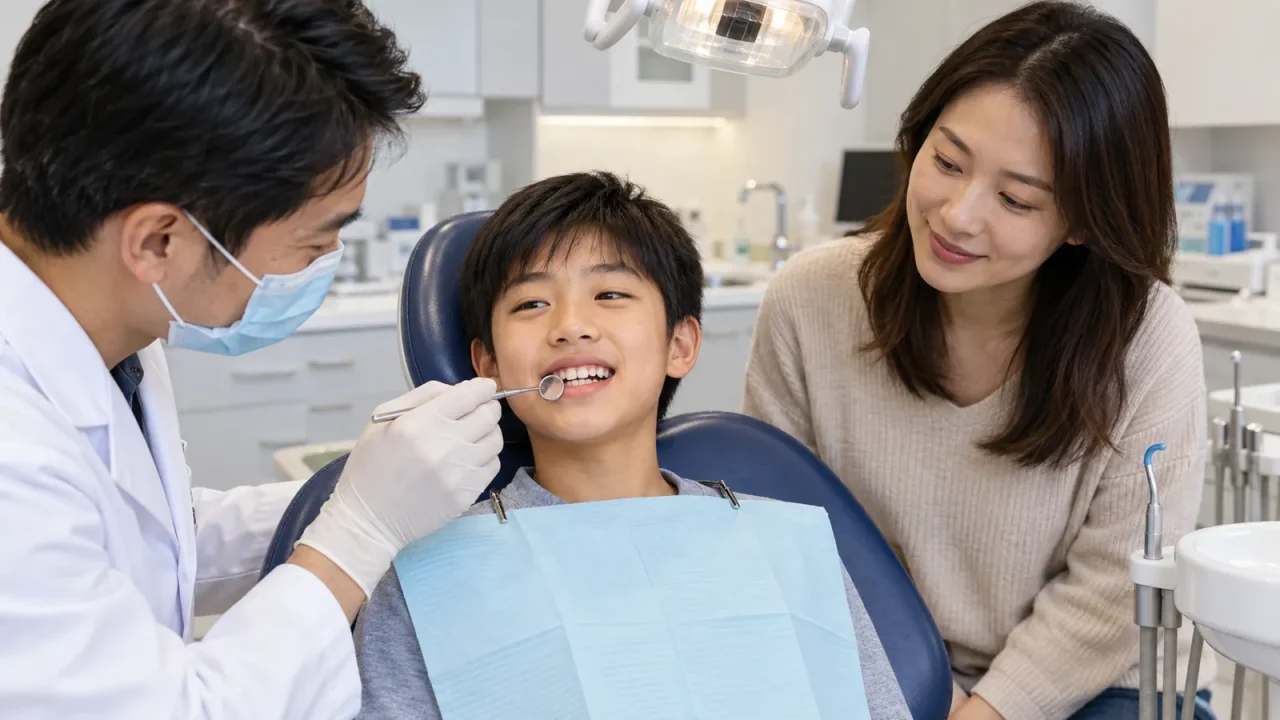
Crowded teeth, teeth that do not meet comfortably and difficulty biting certain foods can be reasons to ask about braces. They do not prove that treatment is needed. An assessment considers how your child’s teeth and jaws are developing, how the bite works and whether treatment or monitoring makes sense.
For parents, the difficult part is often deciding whether a change is ordinary development or something worth mentioning. You do not have to work that out alone, and you do not need to wait until your child asks for a straighter smile. Bring your observations to a dental visit and ask what they mean for your child.
Signs parents may notice as teeth develop
A new adult tooth may look surprisingly large beside the remaining baby teeth. You might notice overlap, a gap that was not there before or a tooth coming through at an angle. These observations are worth discussing, but a snapshot of a growing smile cannot tell you the final result or the right treatment.
Watch for function as well as appearance. Does your child regularly struggle to bite through food with the front teeth? Do they describe an uncomfortable way their teeth meet? Mention repeated cheek biting or an apparent shift when they close their mouth, rather than asking your child to force the teeth into a different position.
The American Dental Association’s orthodontics guidance identifies crowding, protruding teeth, spacing and teeth that meet abnormally among concerns that may warrant correction. A dentist must interpret those findings in context; a single gap or uneven tooth does not settle the question.
It can help to make a short note of what you have seen and when it started. Avoid repeatedly inspecting your child’s smile or describing it as wrong. A neutral explanation, such as “we are going to ask how your teeth are growing,” keeps the conversation focused on care.
Why the bite matters as well as straight teeth
Straight-looking front teeth are only one part of a bite. The upper and lower teeth also need to work together when your child closes their mouth and chews. An assessment looks beyond the smile visible in a photograph.
You may hear terms such as crossbite, open bite or overbite. Ask the clinician to show you what the term refers to in your child’s mouth. The important questions are whether the finding affects function or dental health, what may change with development and whether there is a reason to act at a particular stage.
Keep symptoms separate from assumptions about their cause. If your child has a toothache or pain while chewing, book a dental assessment rather than concluding that braces will fix it. The problem could need a different kind of care. Likewise, jaw discomfort should not automatically be blamed on crooked teeth.
When your child is old enough to participate, let them describe what feels difficult. “I cannot bite into this comfortably” may reveal a concern that a parent would not notice from appearance alone. Their experience belongs in the discussion alongside the examination findings.
What an orthodontic assessment considers
An assessment may include the position of erupted teeth, the way the jaws and teeth meet, available space and the stage of dental development. The clinician also considers oral health and relevant history. Records or imaging may be recommended when they would help answer a particular question.
Ask what each part of the assessment is intended to establish. For example, is the concern a tooth’s position, limited space for an incoming tooth or the way the bite closes? Understanding the problem makes later discussions about treatment choices easier to follow.
Dentistry in Motion lists traditional orthodontics among its services. Parents in North York can ask about a braces assessment and whether further evaluation or referral is appropriate. An appointment is a chance to understand the findings, not a commitment to start treatment.
Bring any previous orthodontic opinion or relevant dental records if the office requests them. If another clinician has already suggested monitoring, explain what was being watched and when the last review took place. Sharing that history helps the team understand what has already been considered without relying on your memory of technical terms.
Why assessment may lead to monitoring first
An assessment can be useful even when no treatment starts. Some concerns need to be watched as teeth erupt and the bite develops. In other situations, the clinician may identify a reason to discuss treatment sooner. The timing depends on the specific finding, not a universal birthday or the fact that a classmate has braces.
The American Association of Orthodontists recommends an initial orthodontic check by age seven. That is a recommendation for assessment, not a rule that every seven-year-old needs braces. If you notice a concern earlier, raise it with your child’s dentist rather than waiting for a milestone.
If monitoring is recommended, ask what the clinician expects to learn over time. A clear plan should tell you when to return and what changes would justify an earlier call. “Not now” is more helpful when it comes with an explanation of what happens next.
Continue regular dental care during that interval. Dentistry in Motion’s children’s dental care can provide a place to raise questions about oral health and development. Monitoring a bite does not replace care for cavities, gum concerns or other problems.
How parents can prepare for the appointment
Before the visit, write down the reason you are asking about braces. Include any difficulty with biting or chewing, when you first noticed it and whether it is changing. If your child has a question about appearance, let them help choose how to describe it.
Bring the information the office requests, such as medical history, medications and details of previous dental treatment. Mention habits you have observed without blame. The aim is to give the clinician useful context, not to make your child feel responsible for the way their teeth have developed.
A short preparation list can help:
- Ask what the assessment includes and whether there is a separate fee for records.
- Check whether previous images or dental records should be transferred.
- Note any pain, injuries or trouble keeping teeth clean.
- Let the office know about anxiety or communication needs.
- Ask your child what they would like explained.
Avoid promising that the visit will end with braces or that no treatment will be needed. A more accurate description is that the dental team will look at how the teeth fit and talk with you about the options. That leaves room for an individual recommendation.
Questions to ask about timing and treatment choices
If treatment is recommended, begin with the purpose. What would it address, and why is the proposed timing appropriate? Ask what the reasonable alternatives are, including monitoring when that is an option.
Braces and removable aligners are different tools, and neither is suitable for every child or every movement. Ask why the recommended approach fits your child’s needs, how much daily cooperation it requires and who will provide and oversee the care. Do not choose solely by how noticeable an appliance looks.
Practical questions matter as well:
- How often are appointments likely to be needed?
- What cleaning or eating changes would treatment require?
- How should we handle a broken bracket or uncomfortable appliance?
- What is included in the estimate, and what could cost extra?
- What retention plan would follow active treatment?
Ask for an explanation of what could change the estimated timeline. Attendance, oral health and the response to treatment can affect a plan, so an estimate should not be mistaken for a guarantee. Take time to discuss the responsibilities with your child before deciding.
Frequently asked questions
Does my child need all adult teeth before an assessment?
No. An assessment can take place while baby and adult teeth are both present. The American Association of Orthodontists notes that this mix of teeth, typical around age seven, gives the clinician useful information about how the bite is developing. The timing of assessment and the timing of treatment are separate decisions.
Do gaps always mean braces are needed?
No. A gap alone does not establish a need for braces. The clinician considers its location, the stage of development, the overall bite and other findings. Ask what is expected to change and whether follow-up is needed.
Can crooked baby teeth predict future treatment?
Their appearance alone cannot reliably tell you whether your child will need treatment. Adult teeth, available space and growth all need consideration. Raise the concern at a dental visit rather than trying to predict the final bite from a photograph.
Can aligners replace braces for every child?
No. Suitability depends on the dental problem, development and the child’s ability to follow the prescribed routine. Ask the clinician to explain appropriate choices and their responsibilities, rather than assuming a removable option will achieve the same result in every case.
What happens if monitoring is recommended?
The clinician should explain what is being monitored and when to return. Keep that follow-up and call earlier if new symptoms or concerns arise. Ask for the plan in writing if it would help you remember the next step.
Discuss your questions with Dentistry in Motion
If you have noticed crowding or a concern about your child’s bite, contact Dentistry in Motion to ask about an assessment. The practice is in Lawrence Allen Centre at 700 Lawrence Avenue West, Suite 206, in North York. Bring the questions you have now; you do not need to decide on braces before the visit.